Sunday, October 4, 2009

Resistance to Civil Governmnet


I first remember reading "Resistance to Civil Government" (or "Civil Disobedience" as its more popular and more contemporary name) either my Senior year of high school or my freshman year here at MSU. At the time I remember feeling like I was a sort of enlightened political activist as so many HS Seniors and College Freshman feel like they are. I was so in awe of this description of Thoreau gallantly sitting through unjust jail time for refusing to support a war and an offense against the human race that he did not support. "Hurrah! Hurrah Thoreau!" I thought. The contemporary event that I most tied this essay to in MY life was the Iraq War. Reading this essay made me wish that there was a way to not pay a certain tax and, in effect, not show my support for the war. Simply thinking that my money was buying Folgers for some government building didn't do the trick enough. I wanted to feel like I was making a protest. I wanted "greater society" to note my refusal to bow down. I wanted glory.

Rereading this account of a man making a political difference was very interesting. I felt, as my political eccentricities have dwindled, so did the impact of his essay. Perhaps it was because I was looking for it to spark the same political storm in me that it had the first time. I found that this rereading lead me to think of the story from a different "I". I felt that this time the essay was merely "I"nteresting rather than "I"nspiring. I felt that this time I was looking at the essay from the eyes of an English Major, concerned with the workings of literature, rather than the eyes of someone who was politically hungry. The change in me seems to be kind of sad, but I like to think that this time I'm actually doing more of what he wants because when I was first inspired I don't believe I had the right perspective on what he was trying to communicate. This time I was able to better make sense of some of his more deftly argued points.

Walking & Sauntering

Emerson opens his work "Walking" with the statement "I wish to speak a word for Nature, for absolute freedom and wildness, as contrasted with a freedom and culture merely civil-- to regard man as an inhabitant, or a part and parcel of Nature, rather than a member of society." Wow! First reading this really makes for a monumental impression. Living where I do, Bozeman Montana, I really feel like I'm ingrained in the whole "nature" scene. Most people seem to regard MSU as a school founded on the
principals of nature-- hence the slogan "Mountains and Minds". However, when I really reflect on the perceptions of what "nature" Emerson is talking about I realize that perhaps we people in Bozeman are just as far from it as those in New Jersey. With our Rock Climbing, down hill ski lifts, ATV's, we aren't walking through nature-- we're flying through it at an extreme pace.

I searched the first memorable line and came up with this link about a hotel review for Yellowstone Park. Further on down on the page of the person that has supposedly I don't really know how to feel about this. If anything, because of Yellowstone's mass tourism and various developments I would say that "the word" this person is speaking supposedly "for nature" is actually a death sentence. Promoting the tourist conditions for the park encourages more and more traffic making it less and less wild. I believe that Emerson would scoff at peoples understanding of YNP as "wild". Personally I do not know if I can really think of a place with as much of an interesting wild/tame dichotomy as YNP.

Further on in the essay Emerson really gets into what he considers the "art of walking". At first, this phrase seems slightly stale and in contradiction of itself. How can walking be an art? As I read further I begin to be illuminated. As he wrote I could really feel what he was trying to convey. His essay itself is the perfect description of his interpretation of walking. One only has to go as far as the feeling of the essay to understand it's point and grasp the feel of one who is an excellent and practiced walker.

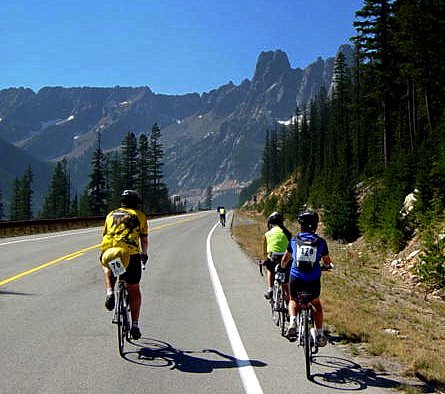
Having read this piece about walking I have tried to become a better saunterist. As I get out of class, instead of proceeding with my normal rapidity I saunter around the campus mall. I go for a quick stroll through some of the grass. I look at the posters on the boards. I walk all over, at a slow-pace. This summer I got into road biking a little bit. I rode all over the surrounding area, at a pace comfortable to me. It wasn't too fast but it was faster than walking. It calmed my mind. I hope that Emerson would approve even though he probably wouldn't. It just seems like it would be too quick for him. I believe that he and I do have a feeling in common though-- practicing the saunter is a way of calming the mind and practicing being more in tune with oneself.


*For a long time people have been doing many other things than sauntering through nature.


*Picture of some people sauntering about nature in my style.

Introduction to 19th Century Journal/Blog!!!


As I begin this journal I would first like to offer an explanation of why I chose the Blog as my medium. My first experience with this sort of academically minded blogging came from the Children and Literature class taught by Dr. Sexson. At first this required blogging seemed to be somewhat boring, difficult to comprehend, and oppressive. However, as the semester went on, I really got more into the hang of it. By the end I felt as though I had moved out of the realm of "Novice blogger" into something a little more advanced. Then, this past summer, I really began to understand and comprehend the benefits of the blogging medium. Because of my flexible job I had a lot of time to read and consider my readings. To avoid being "dry" and not writing all summer I started a literature blog to compose and publish my various thoughts on the literature I had been reading.

It seems in funny contrast to be writing a Blog about the transcendentalists, mainly because of their focus on Nature and computers and the internet seem about the furthest thing from natural. Had I wanted to compose a faithful text of Transcendentalism I feel that I would have made a paper journal-- a yellowy paged work, with torn and frayed edges, composed in black ink, bound with sinewy leather straps and smelling of stove-fire smoke. Well, I didn't want to do that. Although it would be "cool" to do, I wouldn't get the same scholarship as a blog gives (funny enough). I believe that part of learning is looking at vast quantities of information that would, disregarding the internet, be lost to my compositions. So despite this seeming contradiction between transcendental journals and computer blogs I plan on composing a blog to record my thoughts, good and bad, deep and shallow, transcendental and not, on to this web site. To fall into the theme of the day, this combination of styles could be considered and "experiment". I figure that I too can contain multitudes, and displaying those multitudes on a blog is an alright move to make.